Net Asset Value - NAV in Private Real Estate Funds: How It Is Calculated, Valued and Reported to Investors

Private real estate funds can hold valuable properties while investors still have questions about what their ownership is worth. The original purchase price may no longer reflect the portfolio’s value because market conditions and project costs can change. Debt also affects how much value remains for investors.
Net asset value (NAV) estimates what remains after liabilities are deducted from a fund’s assets. The formula is straightforward, but its usefulness depends on accurate information. Understanding NAV helps investors read fund reports with confidence and ask better questions before committing capital.
What Net Asset Value Means in Private Real Estate Funds

Net asset value in private real estate funds represents the estimated value left after all recorded liabilities are deducted from total assets. Property holdings often make up most of the assets. Other assets may include cash or deposits. Funds may also record receivables and short-term investments. Liabilities can include loans or unpaid invoices. Accrued expenses and other obligations also reduce NAV.
NAV gives investors a snapshot of the fund’s estimated net worth on a specific date. It differs from the original purchase price and does not promise immediate payment. Proceeds depend on the sale price and fund terms after obligations are settled.
Three related terms help explain what a report may show:
- Gross asset value: The combined value of assets before liabilities are deducted.
- Fund-level NAV: The value remaining after the fund’s liabilities are subtracted.
- Investor-level value: The portion attributed to an investor under the fund’s ownership and allocation rules.
A portfolio may own properties worth millions of dollars yet have a much smaller NAV when much of its value is financed with debt. Investors should review the full balance sheet rather than property values alone.
How NAV Is Calculated: Formula and Example
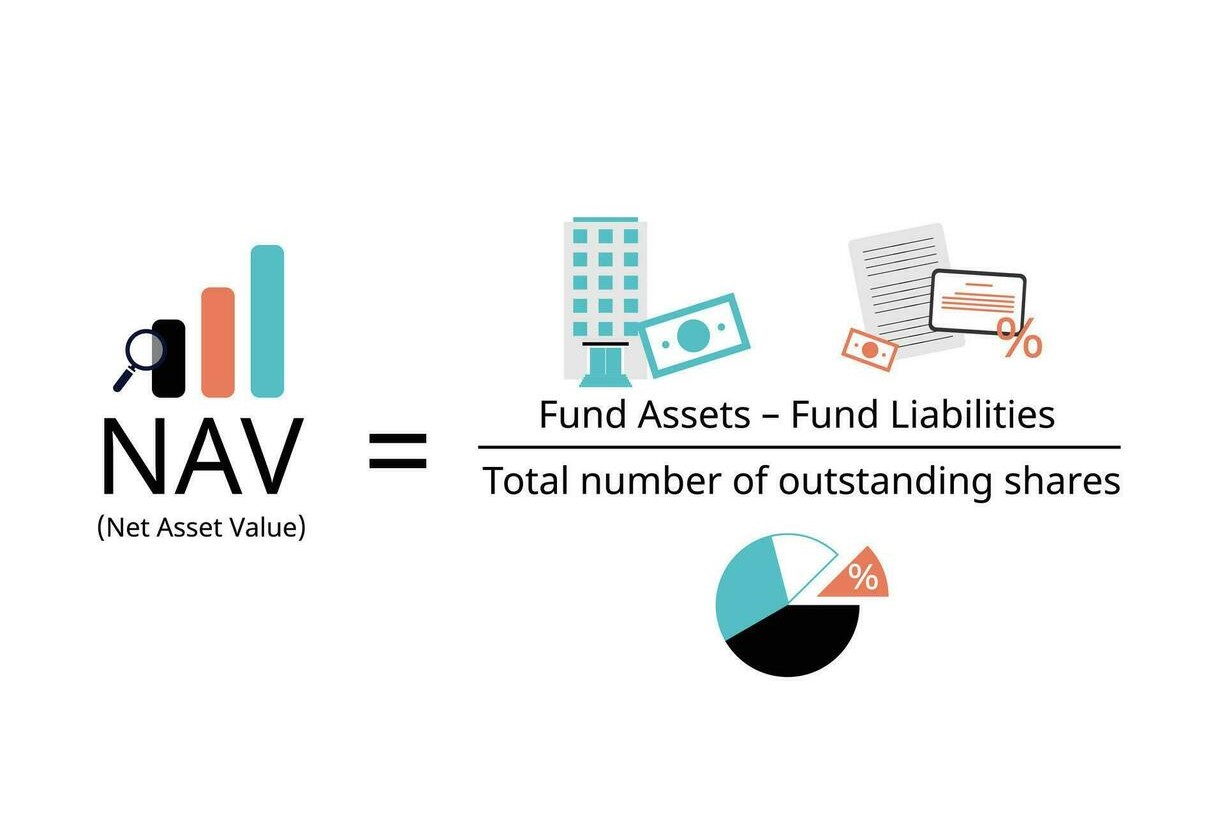
The basic NAV calculation uses a simple formula:
NAV = Total Assets − Total Liabilities
Some funds also report NAV per unit. This figure divides the fund’s NAV by the number of outstanding units:
NAV per Unit = Fund NAV ÷ Units Outstanding
Fund documents should explain whether fees or performance allocations are included.
Consider this illustrative balance sheet:
Item | Amount |
Property portfolio at estimated value | $24,000,000 |
Cash and reserves | $1,500,000 |
Other assets and receivables | $500,000 |
Total assets | $26,000,000 |
Property loans | $15,000,000 |
Accrued expenses and other liabilities | $600,000 |
Total liabilities | $15,600,000 |
Net asset value | $10,400,000 |
The fund’s estimated NAV is $10.4 million because its $15.6 million in liabilities is deducted from $26 million in assets. If the fund has 104,000 equal units outstanding, the NAV per unit is $100.
These figures are illustrative. A real fund may use different accounting policies or multiple ownership classes. Investors should confirm how their share is allocated because fund-level NAV may differ from their individual balance after contractual adjustments. Because the formula uses estimated values, a small change in property valuation can affect the final NAV. Investors should also check whether units are measured before or after capital activity during the period. Reporting notes should make this treatment clear so changes can be compared fairly.
Assets and Liabilities That Shape NAV

A reliable NAV calculation records assets and liabilities completely as of the same date. Combining a recent property valuation with outdated debt or expense records can distort the result.
Assets extend beyond properties. Cash reserves can cover planned costs while receivables represent amounts due from others. Deposits may also qualify as assets under the fund’s accounting policy. Each balance needs support because not every amount recorded will necessarily be collected in full.
Liabilities reduce NAV because they represent obligations that the fund must settle. Common examples include:
- Outstanding property loans and accrued interest.
- Construction invoices and unpaid contractor costs.
- Taxes and professional service fees.
- Fund administration expenses and other accrued obligations.
- Contractual payments or allocations required under fund documents.
Missing liabilities can make NAV look stronger than it is. Investors should check whether reports include property-level debt and fund-level obligations. They should also confirm that expenses have been recorded through the valuation date.
How Property Valuation Methods Affect NAV

Property valuations affect NAV because private real estate does not have a continuously quoted market price. Managers must estimate the value of each holding under a stated policy. Managers may rely on appraisals or comparable property sales. Some also use discounted cash flow models or cost-based methods for projects under development.
Comparable sales need adjustments for differences in size and condition.
A discounted cash flow model depends on forecasts and the rate used to calculate present value. A cost-based method must test whether spending is supported by likely market value. No method removes uncertainty.
Independent appraisals provide outside evidence but cannot guarantee a buyer’s final price. Sale proceeds may differ as conditions change or a transaction becomes time-sensitive. Reports should explain assumptions and disclose material changes in valuation methods.
Investors should ask how often properties are reviewed and who approves estimates. They should also check whether an independent valuation professional is involved. Consistent methods make reports easier to compare and unexplained changes easier to spot. Valuation timing matters as much as the method itself. An estimate prepared several months earlier may not reflect new construction costs or a change in buyer demand. Ask whether major events after the valuation date are disclosed in the report.
How NAV Is Reviewed and Reported to Investors

NAV reporting begins with accurate records. The finance team reconciles its bank balances and checks debt statements. It updates property valuations and records liabilities through the reporting date. The fund then subtracts total liabilities from total assets to calculate NAV.
Reporting frequency depends on the fund structure and its governing documents. Some funds report quarterly while others follow a different schedule. Investors should confirm the timetable in the offering materials and fund agreement.
A useful NAV report should make the calculation understandable. It may include:
- The valuation date and period covered.
- Property values and other asset balances.
- Total liabilities and the fund’s borrowing position.
- Fund-level NAV and any NAV-per-unit figure.
- Significant valuation changes since the previous report.
- Key expenses and adjustments that affect investor balances.
- Notes about methods or assumptions that have changed.
Independent audits can strengthen confidence in financial statements, but they do not guarantee future sale prices. Investors should understand the audit’s scope and ask whether property valuations receive separate review. Clear reports explain important movements rather than offering a headline figure alone.
How Investors Should Interpret Changes in NAV

A change in NAV deserves an explanation. Higher property values or lower debt may increase it while rising costs or weaker valuations may reduce it. New capital contributions can also increase NAV, so a larger figure does not always mean the investments performed better.
Compare reports across periods and identify what caused the change. Ask whether the movement reflects a new valuation or a capital contribution. Check whether the fund repaid debt or took on more borrowing. Expenses may also explain the change. The manager should connect the figures to specific events or accounting adjustments.
Leverage deserves special attention
Debt can magnify the effect of a property value change on the equity that remains after liabilities. For example, a decline in asset value can lead to a proportionally larger drop in NAV when borrowing is high. Gross property value alone does not show financial strength.
NAV is not the same as investment performance. Contributions and distributions affect the balance, while fees and transaction timing affect actual returns. Review NAV alongside realized proceeds and the fund’s stated performance measures. Ask for a written breakdown when a material change remains unexplained.
NAV Limitations and Warning Signs Investors Should Watch

NAV estimates net worth on a specific date. It does not guarantee a sale price or allow investors to withdraw capital whenever they choose. Transactions may take time. Selling costs and debt repayment can also reduce the amount available for distribution. The fund agreement defines investor rights and restrictions.
Watch for these warning signs:
- Unclear valuation methods: The manager cannot explain how property values are determined.
- Large unexplained increases: NAV rises without credible support or a clear account of the change.
- Incomplete liabilities: Reports show asset values but provide little detail about debt or unpaid obligations.
- Inconsistent reporting: Dates or methods change without an explanation of the effect.
- Limited financial detail: Investors receive a headline number without useful supporting information.
Such signs should prompt investors to ask questions and request documents that support the calculation. Independent financial or legal advice may help when a material issue remains unresolved.
Fund-level NAV may differ from the amount received at exit. The final amount can be affected by transfer limits or redemption terms. Transaction costs and performance allocations may reduce it further. Review both the reported value and the rules governing access to capital.
Final Thoughts: Using NAV to Make More Informed Investment Decisions
NAV is a starting point for understanding a private real estate fund. Its value depends on reliable valuations and complete liability records. Consistent methods also help investors track changes over time.
Before committing capital, review how the fund calculates NAV and how often it reports results. Ask what caused major changes and how debt or expenses affect the figure. NAV should be considered alongside the fund’s strategy and risks rather than treated as a standalone measure of success.
Prawdzik Capital supports investor education by helping investors understand private real estate equity and its structures. Learning how NAV works can help investors assess reports and ask clearer questions. The goal is to use available information in decisions that fit their objectives and risk tolerance.
Frequently Asked Questions About NAV in Private Real Estate Funds
Q1. What does NAV mean in a private real estate fund?
NAV stands for net asset value. It is a fund’s estimated assets minus its liabilities on a stated date. It does not guarantee how much an investor will receive.
Q2. How do you calculate NAV?
Subtract total liabilities from total assets to calculate NAV. Divide that figure by outstanding units to find NAV per unit. Fund documents should explain any adjustments to investor balances.
Q3. How often do private real estate funds report NAV?
Reporting depends on the fund’s structure and documents. Some funds report quarterly while others follow a different timetable. Confirm the schedule in the offering materials and fund agreement.
Q4. Can NAV fall even if a property has not been sold?
Yes. NAV can fall when property estimates decline or liabilities increase. New valuation or cost information can change the figure before a sale.
Q5. Does a higher NAV always mean better investment performance?
No. NAV can rise because of new contributions or lower liabilities as well as stronger property values. Review fees, leverage and realized results before judging performance.